Growing up across Australia
Baby Animals Down Under explores Australian wildlife through the first stages of life. Rather than centring on a single species, the series moves between habitats to show young animals growing, learning and facing the demands of survival. The result is a natural-history programme organized around development, family bonds and the challenges of becoming independent.
The first season’s six chapters cover forests, islands, bushland, waterways, the outback and the coast. This habitat structure creates useful comparisons: a young animal learning to climb, one leaving a sandy nest and one entering the sea face very different beginnings. The programme uses those settings to give its wide cast a clear geographic framework.
Forest families and the Australian bush
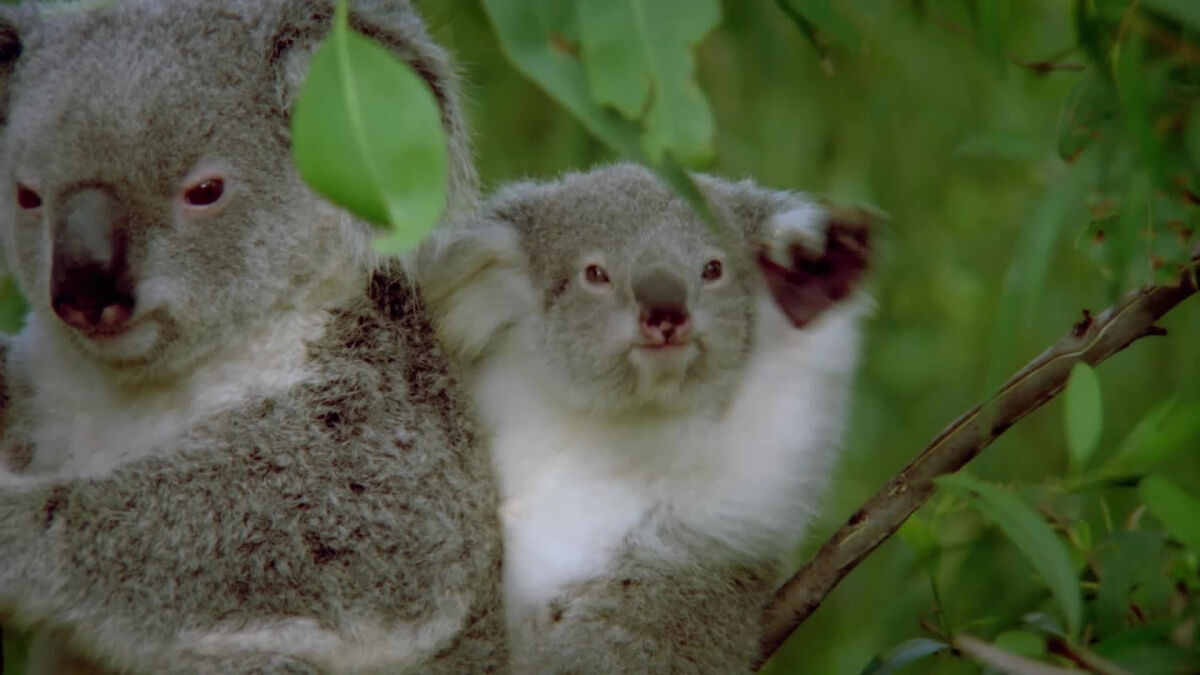
The forest episode includes koala joeys developing from pouch-bound newborns into climbers, flying fox pups learning to fly and kookaburra chicks moving beyond the nest. Its Queensland rainforest stories also include tree kangaroos and cassowary chicks. These examples bring several kinds of early development into the same habitat-based chapter.
Bushland introduces another set of early-life challenges. The episode description names wombat youngsters exploring underground and echidna puggles developing protective spines, alongside brumby foals and young birds. Looking across these stories, the series offers an accessible way to notice how different bodies and behaviours suit different surroundings.
From island shores to open water
Island Babies ranges from green sea turtle hatchlings heading towards the ocean to fur seal pups learning to swim and quokka joeys taking their first hops. Tasmania brings young Tasmanian devils into the picture. The episode extends to subantarctic Macquarie Island, where king penguin chicks, elephant seal pups and young albatrosses grow up in exposed conditions.
Elsewhere, the programme’s waterways include crocodile hatchlings and black swan cygnets, while the coastal stories feature sea lion pups, pelican chicks and humpback whale calves. The variety makes the series a useful introduction for viewers interested in comparing how land, freshwater and marine animals begin their lives.