

Blue Planet II
A BBC natural-history series exploring ocean life through a collection of habitats and animal stories, from tropical waters to the poles.
The ocean is too vast for a single story. Start with one creature, follow an investigation, or take the long view. This collection brings together five distinct perspectives, with questions to carry into your viewing and sources to follow afterwards.
A BBC natural-history series exploring ocean life through a collection of habitats and animal stories, from tropical waters to the poles.

Divers, scientists and photographers work to document changes to coral reefs, bringing an underwater investigation into public view.
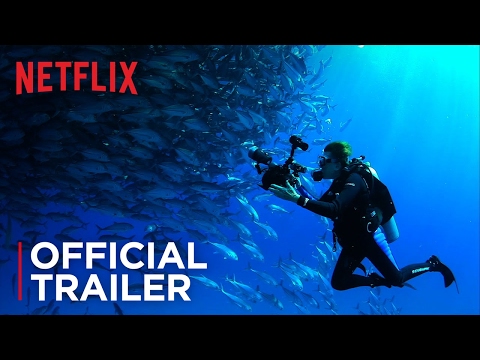
Oceanographer Sylvia Earle’s campaign to protect the ocean connects a personal life in exploration with questions of conservation.

A filmmaker’s encounter with an octopus in a South African kelp forest becomes a starting point for looking more closely at the natural world.

David Attenborough reflects on ocean loss and the possibilities of protection, drawing on a lifetime of natural-history storytelling.
Dense growths of large brown algae provide food and shelter in cool, shallow coastal water.
Stressed coral can lose its symbiotic algae. Bleaching is not the same as death, but sustained stress can be fatal.
Sunlight diminishes with depth: NOAA distinguishes sunlight, twilight and aphotic zones.
Protection varies by the permitted uses of an area. A multiple-use area and a no-take reserve have different rules.