What is Chasing Coral about?
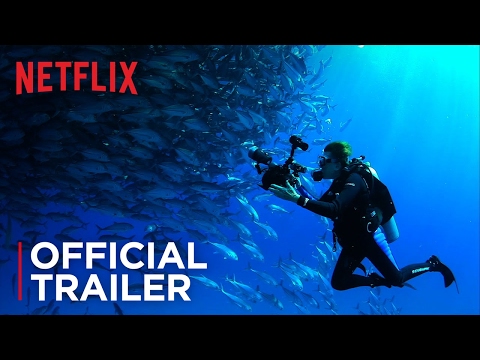
Chasing Coral is a 93-minute documentary directed by Jeff Orlowski and released on Netflix in 2017. Divers, photographers, camera designers and marine scientists work together on a specific task: recording coral bleaching as it unfolds underwater.
The film follows the changing reefs and the practical effort needed to photograph them over time. Its subject is both an environmental event and the challenge of making that event visible. This recording project gives the documentary a narrower focus than a survey of ocean wildlife.
How the project began
Richard Vevers approached the filmmakers after seeing Orlowski’s Chasing Ice. He wanted the team to document changes taking place beneath the sea. The director’s move from glaciers to coral reefs connects two projects concerned with showing environmental change through sustained visual observation.
Scientists named on the film’s official site include Ruth Gates, Phil Dustan, James Porter and chief scientific adviser Mark Eakin. Their work provides a scientific setting for the divers’ and photographers’ observations.
Time-lapse cameras and underwater filming
Camera designers and marine biologists helped develop an underwater time-lapse system to record bleaching. Images made at intervals can show changes that a single photograph or a short visit would not capture.
Storms, equipment problems, communication difficulties and oxygen-tank limits complicated the work. The production FAQ gives a filming period of three and a half years. The film site separately records more than 500 hours of underwater footage and bleaching images submitted by volunteers in 30 countries. Footage length and time spent diving measure different things.
Why does coral turn white, and can it recover?
Microscopic algae live within coral tissue. They supply an important food source and contribute to its colour. When environmental changes create stress, coral can lose these algae and become pale or white. This loss is called bleaching.
A bleached coral is not necessarily dead. Some coral can recover if the stress eases; prolonged algae loss and continuing stress can lead to death. An image of bleaching therefore records a condition at one moment, rather than establishing whether that coral later recovered.
NOAA identifies warmer water as an important cause, alongside factors including pollution and runoff, strong sunlight and extreme low tides. Its account also describes bleaching caused by unusually cold water. These distinctions help explain what the filmmakers were recording.
How it compares with other ocean documentaries
Chasing Coral is a useful choice for an interest in coral ecology or underwater documentary production. Its focus is a bleaching investigation and the people trying to document it. Blue Planet II covers a broader range of ocean habitats and wildlife; Mission Blue follows Sylvia Earle’s life and conservation work; My Octopus Teacher centres on an individual encounter in a kelp forest.
Released in 2017, Chasing Coral offers a historical record. Present-day reef conditions require newer monitoring evidence. The related films below offer other subjects and scales of ocean storytelling.