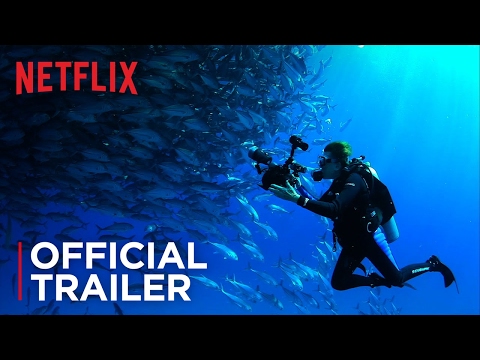
David Attenborough reflects on ocean loss and the possibilities of protection, drawing on a lifetime of natural-history storytelling.
A lifetime of ocean discovery
Ocean with David Attenborough brings the natural historian’s lifetime of experience to a film about the condition and future of the seas. Released in 2025, it visits underwater habitats while arguing that discovery and responsibility belong together. Its central question is how marine life can recover when the pressures placed on it are reduced.
The documentary places spectacular ocean life alongside human activity that can damage it. This gives the underwater photography a clear purpose: the habitats are the subject of an argument about restoration. Viewers looking for an introduction to marine conservation will find a film organized around both the challenges and the possibility of change.
Making hidden damage visible
In his National Geographic interview about the film, Attenborough explains the decision to show bottom trawling. Damage beneath the surface is harder for the public to see than the clearing of a forest on land. The film therefore brings attention to an industrial process that can remain remote from everyday experience.
Attenborough also distinguishes damaging practices from fishing as a whole. His stated argument allows for people continuing to gather food from the sea, including communities that fish sustainably. That distinction is essential to understanding the film’s position: the issue is which methods are used, where they operate and what their consequences are.